

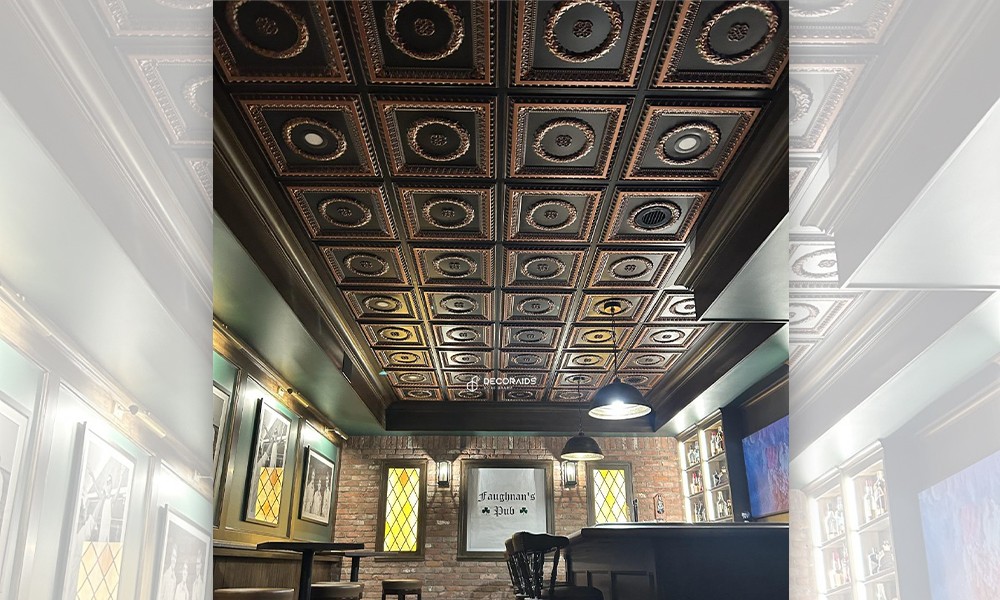
When people think about improving a space, they usually go straight to the obvious things-furniture, lighting, maybe a fresh layout.
The ceiling? It’s almost always an afterthought.
But here’s the thing. Once you start paying attention to how a room actually feels over time, the ceiling quietly plays a bigger role than expected, especially when it comes to sound.
That’s where acoustic ceiling panels come in. They don’t shout for attention, but they can completely change how comfortable a space feels day to day.
You don’t notice bad acoustics right away, but you feel it.
Most people don’t walk into a room and immediately think, “The acoustics here are off.”
Instead, it shows up in small ways.
You might feel like:
- Conversations are slightly harder to follow
- The room feels a bit “noisy” even when no one is loud
- You get tired faster during meetings or long stays
At first, it’s easy to ignore. But over time, it becomes more noticeable.
What’s happening is simple-sound is bouncing around too much, and there’s nothing to absorb it. That’s exactly the kind of situation where ceiling acoustic panels start to make a difference, even if you don’t consciously realise why the space suddenly feels better.
It’s not about silence-it’s about balance.
One common misunderstanding is thinking that acoustic improvements are about making a room quiet.
That’s not really the goal. A good space still has sound-people talking, moving, working. What changes is how that sound behaves.
- Reflect off hard surfaces
- Overlap and build up
- Linger longer than it should
With ceiling panels, those reflections are reduced.
So instead of sound bouncing endlessly, it settles more naturally. Conversations become clearer, and background noise feels less overwhelming.
The room doesn’t go silent-it just feels more balanced.
Conversations become easier without people trying.
This is one of the first things people notice, even if they don’t realise why.
In untreated spaces, people often:
- Speak a little louder than necessary
- Repeat themselves more often
- Strain slightly to keep up with conversations
It’s subtle, but it adds effort.
Once ceiling panels are in place, that effort drops.
People don’t need to adjust as much. Voices sound clearer, and conversations flow more naturally.
It’s one of those changes where nothing dramatic happens-but everything feels easier.
Background noise stops taking over the room.
Think about all the small sounds that happen in a space:
- Typing on a keyboard
- Footsteps
- Chairs moving
- Distant conversations
Individually, they’re not a big deal.
But in a room with poor acoustics, these sounds don’t stay small-they spread.
They bounce around, layer on top of each other, and suddenly the space feels constantly “busy.”
Ceiling panels help tone that down. They don’t remove those sounds completely, but they stop them from travelling so far and building up too much. The result is a space that feels calmer, even though activity is still happening.
You feel the difference more over time.
This is where the impact really becomes clear.
At first, you might just notice that the space feels “nicer” or more comfortable.
But after spending a few hours there, the difference becomes more obvious.
In spaces without proper sound control:
- Meetings feel more draining
- Focus becomes harder to maintain
- You feel mentally tired faster
With ceiling panels, that strain reduces.
You’re not working as hard just to hear, speak, or focus. The environment supports you instead of subtly working against you.
They work quietly in the background.
One of the best things about ceiling panels is that they don’t take over the design.
They:
- Sit overhead, out of the way
- Don’t interfere with layout or movement
- Can blend into the overall look of the space
So while they’re actively improving comfort, they’re not competing with the visual design. It’s a practical solution that doesn’t demand attention-but still delivers noticeable results.
Especially useful in open and shared spaces.
If there’s one type of environment where ceiling panels really stand out, it’s open or shared spaces.
Places like:
- Offices
- Meeting rooms
- Cafés
- Classrooms
These areas naturally have more sound activity, and without control, noise tends to spread quickly.
Because the ceiling covers such a large surface area, treating it helps manage sound across the entire room, not just in one corner. It’s an efficient way to improve acoustics without changing how the space is used.
Final Thoughts
Ceiling panels might seem like a small detail, but they have a quiet way of improving how a space actually works.
Acoustic ceiling panels don’t just reduce echo-they help create an environment where:
- Conversations feel natural
- Noise stays manageable
- People feel more comfortable over time
And the best part is, most people won’t even notice why the space feels better.
They’ll just know that it does. Sometimes, that’s exactly what good design is supposed to do.
