

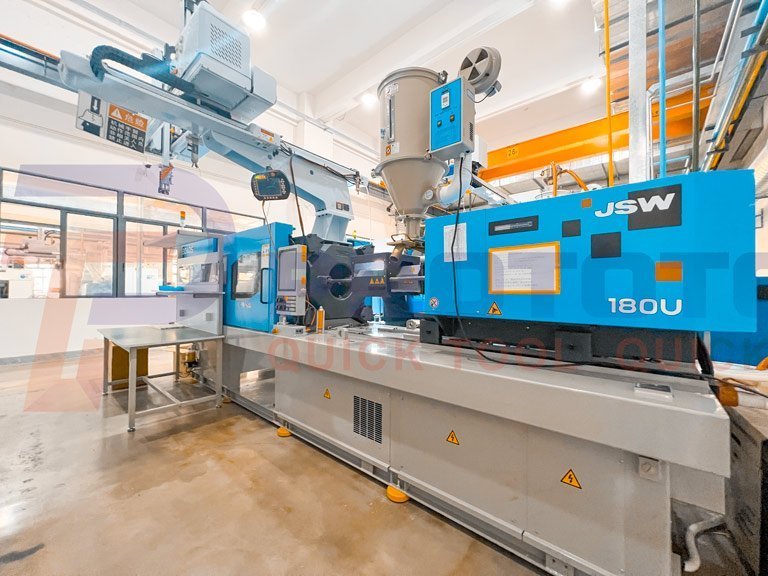
When you hold a smartphone, wear a watch, or undergo medical treatment, there’s a silent partner in the background: a mim manufacturer whose precision work makes modern life possible. Metal Injection Moulding (MIM) has transformed from a niche manufacturing process into an essential industrial capability, and the manufacturers who’ve mastered it are reshaping how we think about metal components.
What Makes MIM Manufacturing Different
Traditional metalworking methods have served us well for centuries, but they come with limitations. Machining wastes material. Casting lacks precision. Forging can’t achieve complex geometries. A mim manufacturer solves these problems by combining the best aspects of plastic injection moulding with the strength and durability of metal.
The process itself is remarkable. Metal powders are mixed with binding agents to create a feedstock that flows like plastic. This mixture gets injected into moulds at high pressure, creating what’s called a “green part”. After removing the binder and sintering at high temperatures, you’re left with a component that’s 96-99% dense metal with tolerances that would make a watchmaker proud.
“We can produce parts with features that would be impossible or economically unfeasible through conventional methods,” explains a production manager at a Singapore facility. “Wall thickness variations, undercuts, internal geometries – these challenges become opportunities with MIM.”
Industries That Depend on MIM Manufacturing
The applications stretch further than most people realise:
Medical devices
Surgical instruments, orthodontic brackets, and implantable components require biocompatible materials and exact specifications that a skilled mim manufacturer delivers consistently
Consumer electronics
Mobile phones alone contain dozens of MIM components, from SIM card trays to camera modules and vibration motor parts
Automotive sector
Engine components, fuel system parts, and transmission elements benefit from the high-volume production capabilities
Firearms and defence
Complex trigger mechanisms and safety components demand the precision that MIM processes provide
Industrial equipment
Gears, locks, and power tool components rely on the strength-to-weight ratios achievable through metal injection moulding
The Singapore Advantage in MIM Production
Singapore has emerged as a significant hub for metal injection moulding, and there are concrete reasons why. The city-state’s manufacturing sector combines technical expertise with quality consciousness that’s become legendary. When a mim manufacturer operates from Singapore, they’re drawing on decades of precision engineering culture.
“Quality isn’t negotiable here,” notes a quality control specialist. “Our clients in aerospace and medical sectors demand documentation for every batch, traceability for every component. That discipline is built into how we work.”
The regulatory environment supports innovation whilst maintaining strict standards. Singapore’s strategic location also means shorter supply chains to major Asian markets, reducing lead times without compromising quality. For companies sourcing components, partnering with a Singapore-based mim manufacturer offers reassurance that international standards will be met or exceeded.
Material Options and Capabilities
One of the greatest strengths a modern mim manufacturer brings to the table is material versatility. Stainless steels remain popular for their corrosion resistance and strength. Low-alloy steels offer cost-effectiveness for high-volume applications. Titanium alloys serve medical and aerospace needs where biocompatibility or weight savings justify the premium.
Tool steels, soft magnetic materials, and even precious metal alloys can be processed through MIM. This flexibility means design engineers aren’t constrained by manufacturing limitations. If you can imagine it and model it, chances are a capable mim manufacturer can produce it.
Cost Considerations and Break-Even Points
Metal injection moulding shines in specific scenarios. For simple shapes in low volumes, traditional machining might prove more economical. But as complexity increases and volumes rise, the economics shift dramatically. A mim manufacturer can typically achieve cost parity with conventional methods somewhere between 5,000 and 10,000 units, depending on part complexity.
Beyond that threshold, the advantages multiply. Material utilisation rates of 97% or higher mean less waste. Minimal secondary operations reduce labour costs. Consistent quality reduces rejection rates. These factors compound across production runs.
Quality Assurance and Testing Protocols
Reputable facilities maintain rigorous testing regimes. Dimensional inspections verify that parts meet specifications. Metallurgical analysis confirms material properties. Non-destructive testing identifies internal defects before they become field failures.
“We treat every production run as if lives depend on it,” emphasises a senior engineer, “because in medical applications, they actually do.”
The Future of Metal Injection Moulding
Innovation continues to push boundaries. New binder systems reduce cycle times. Advanced sintering techniques improve material properties. Digital manufacturing tools enable rapid prototyping and design optimisation. The mim manufacturers who invest in these technologies are positioning themselves as essential partners for next-generation product development.
As industries demand smaller, lighter, stronger, and more complex components, metal injection moulding becomes increasingly relevant. The manufacturers who’ve mastered this process aren’t simply vendors – they’re collaborators who can transform conceptual designs into physical reality with remarkable precision and consistency.
Whether you’re developing the next breakthrough medical device or refining an existing product line, choosing the right mim manufacturer might be the most important decision you make in your supply chain.
