

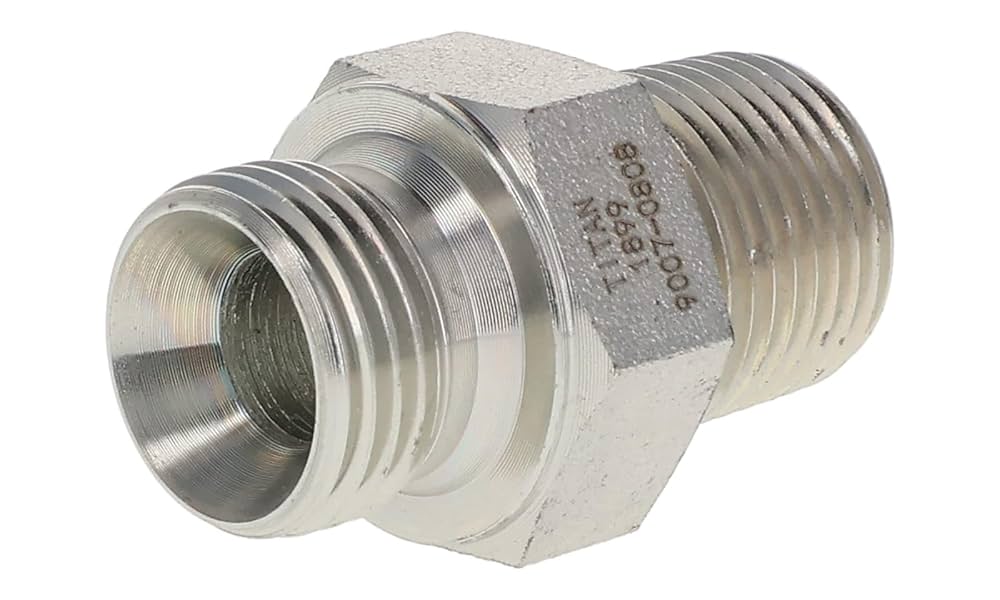
Quick-connect fittings allow rapid attachment and detachment of hydraulic lines without threaded connections. These couplers contain internal valves that automatically close when separated, preventing fluid loss. The mechanism uses spring-loaded components and precision-machined surfaces to create secure connections while maintaining pressure integrity. This helps explain why they’re essential in equipment that changes hoses frequently.
Connection mechanism design
A Hydraulic Quick Couplers consists of two main components: the body and the sleeve. Spring and seal surfaces are located in the body. The sleeve slides over locking balls or pins that secure the connection:
- Male half inserts into female socket through a tapered nose
- Locking mechanism engages automatically at full insertion depth
- Internal geometry prevents accidental disconnection under pressure
- Seal surfaces align precisely when components mate fully
Pushing the male nose past retaining elements causes them to snap into locking grooves. This mechanical retention resists separation forces from pressure spikes and hose movement. The audible click during connection confirms proper engagement.
Valve operation sequence
Both coupling halves contain spring-loaded poppet valves that seal their respective flow passages when disconnected. During connection, these valves open in a specific sequence. As the male nose enters the female socket, it contacts and pushes the female poppet backwards against spring pressure. Continued insertion moves the male poppet as well, creating an open flow path through both components. The valve timing matters because it determines whether fluid escapes during connection. Flat-face designs keep both valves closed until the final engagement moment, minimizing spillage. Other configurations begin opening valves earlier, which works for applications where slight fluid release is acceptable.
Pressure flow management
Flow passages through quick couplers restrict fluid movement compared to a straight hose. The internal valve seats, poppet stems, and changes in flow direction create a pressure drop:
- Larger bore sizes reduce restriction for high-flow applications
- Valve design affects turbulence and energy loss
- Pressure ratings determine the maximum system pressure the coupler can handle safely
- Flow coefficients specify actual flow capacity at given pressure differentials
Poppet springs must generate enough force to close valves against maximum system pressure when disconnected. Stronger springs increase connection and disconnection forces but improve sealing reliability.
Seal engagement process
O-rings positioned on both the male nose and internal valve components create multiple sealing points. As the connection progresses, these seals compress against machined surfaces in sequence. Primary seals on the male nose contact the female bore first. Secondary seals around poppets engage as valves open. This layered sealing approach prevents leakage even if one seal degrades. Material selection for seals depends on fluid compatibility and temperature range. Nitrile serves general petroleum applications. Viton handles synthetic fluids and heat.
Disconnection requires pulling back the locking sleeve while applying separation force. Moving the sleeve releases retaining balls or pins from their grooves. Continued pulling extracts the male nose while spring pressure closes both poppets. The valves seal before complete separation occurs, trapping pressure on both sides. Quick couplers work through coordinated valve operation, mechanical locking, and multi-stage sealing during connection and disconnection cycles. Spring-loaded poppets automatically control fluid flow while retaining mechanisms secure the joint against pressure forces. This combination enables rapid line changes while maintaining system cleanliness and pressure containment.
